Sunday, 16 November 2014

OUGD403 Module Evaluation


I have thoroughly enjoyed this first module of which is now coming to an end and I think it had been a great start to the course because I have really enjoyed the variation of the module in having to use various different skills to be able to complete the task. It has furthered the knowledge in subjects that I am experienced In but had also brought to light new skills of which I need to learn and improve and has made me start to do that. The first brief was a brilliant start to the course as I have always wanted to delve further into the theory and application of typography as I don't believe we looked at it in enough details in my previous qualifications. This unit was also a big help as it helped improve my hand drawing skills. The second unit also helped me improve my illustrator skills as I am too used to photoshop and need to learn to bridge out into other softwares and this helped me do this. The third unit was one unit of which I thought I was going to hate but actually as it developed it helped be realise the importance or researching skills and improved the way I do this and finally the fourth and final unit was something of which I already love to do and therefore I thoroughly enjoyed it. Overall between the four units I think this first module has been very good help in the improvement of my skills. My favourite brief was definitely brief four as the creation of posters is one of my favourite parts or graphic design and I thought the lead on from the research in brief three was a really good way to attack the brief. Throughout this unit I struggled getting my head around the blogging aspect to the course but it all come together nicely towards the end of the course as I realised that the best way to keep on top of the blog to little parts at a time. To end on a positive note I also thought the study tasks between studio briefs to get us prepared for what is to come is a great way to structure out workload.

For the modules after this I hope to keep on improving my skills within the subject and have learnt about a lot of processes I have used a bit and ant to use more or would like to use for the first time such as some of the more specialist equipment in the digital print resource. With this next module I will concentrate on keeping my attendance and punctuality at maximum and keep on top of my blog by writing little bits at a time so that I don't ever have to play catch up with it again.


OUGD403 Studio Brief 4 Message & Delivery - Delivery - Final Crit

In this final crit for the final brief of the module I presented my poster to the group and explained the meaning and message I was tying to deliver through my posters I was given feedback by my peers in the crit.

In the crit It was said that the style that the donation campaign is in was an interesting yet still eye catching and appealing style and it works very well, and overall as a set they are  quite effective, the improvised use of stock to add extra dimensions to the poster as a whole was also widely appreciated by the group, although it was suggested that on the type only and type and image poster there was too much text used. I would disagree with this point as I believe the fact that the posters are for donation purposes I believe they have to be accompanied by a good amount of information at I don't believe that people would donate with out this information to accompany it, this was further back up when John (Tutor running the crit) agreed with my point as said that the poster is more a style of poster that would appear at a place where someone would have a good opportunity to read it such as at a bus stop rather than the style of poster that you only need a very short amount of time to read such as on the side of a bus and this extended reading time is necessary for this style of poster as it needs to be informative to the reader.

OUGD403 Studio Brief 4 Message & Delivery - Delivery - Design Development

Now I knew in which style I was going to design and what message I was going to portray In the message it was time to get going with the creation of the posters. My initial design came from the name of the fight "The Rumble in the Jungle" as it gave me the idea to start with a jungle scene style to the photo. I drew out some quick sketches of some jungle style palm tree boards on the left hand and right hand side of a page, when the sketches got good enough I used the final one by scanning it in and using it as a template for my creation of the first digitalised poster. As this was all surrounding a naturalistic theme I decided it would be best to choose green and brown as my two colours for the posters as these earthy colours depicted the meaning I was trying to display. I decided with the type and image and the image only poster the best way to make the poster high impact would be to use a quote surrounding the downfall of the city and too partner this is both examples with a strap-line of which said "Donate to bring this country back to its former glory" and these two posters came together rather nicely. A problem I later encountered was what I should do with my image only poster. As I was not the only person struggling so much with this I decide to set up a small informal crit where we displayed out thoughts and meaning being delivered and were given advice by our peers. In this informal crit it would be most appropriate and evident for the type only poster to be an image of which clearly shows the meaning of donation. Eventually I came up with the idea of a hand dropping £2 into a donation box, to keep this tied in with my my first two posters I created this Image in an illustrative design and kept my original colour scheme and after doing this the three posters came together as a set of posters of which were aesthetically similar.  Here are my final three designs;


After the completion of my three posters I ran a test print to see how the designs would come out and this helped me to identify a few minor design problems of which I later solved back on the computer program. When I knew the posters where them definitely ready for the final print it was then time to think about which stock I should print them on. After some thinking I decided that I would print the posters on sugar paper as the colour of the paper fit in very nicely with my chosen colour scheme and therefore added a further dimension with another colour from the stock, the paper also isn't the best at taking ink and therefore the almost feathered edges of the images that developed from this fact works well to display the rustic style I was looking for and finally the thickness of the sugar paper also added to the overall aesthetics of my final poster. 


OUGD403 Studio Brief 4 Message & Delivery - Delivery - Research Into Aid Campaigns

As I had decided now that I was going to create three posters for a foreign aid campaign to help raise money I decided that I would look at some previous or existing posters and to evaluate what they are like to help influence my design decision, here are some of the poster examples I have looked at;


The style of design that is regularly used is the overlaying of an informative graphic over a Picture and I believe this style of design is quite outdated, so therefore I decided I would recreate this style of donation appeal poster but i would do it in a very different illustrative style that I believed would work. I chose to use this style as it allows me to both add a modern sense of design to the poster but it also remains to give me enough room in the poster to be informative aswell.

OUGD403 Studio Brief 4 Message & Delivery - Delivery Interim Crit

Going into the interim crit for this studio brief I was slightly worried as even though I knew which general area of my research I was going to portray in my posters I still didn't know by what means I was going to do this and this was beginning to bother me as it felt like time was running away with this brief.

In the brief I told my peers that I wanted to display my message about the troubles in Kinshasa but I didn't know how to do this, many ways were suggested to me but my favourite between them all were one of my own ideas of adapting the information into a foreign aid campaign to help collect donations to help the city and another message where I could talk about how money is pumped into big events and what is done to sustain the money spent on the events when the event is over and whether the money is well spent.

After a long time debating between these two eventually the idea surrounding the aid campaign jumped out at me the most so it was the one I decided to do, and with time running away I started to design.

OUGD403 Studio Brief 4 Message & Delivery - Delivery Continuation

I have decided that I now know I want my chosen message that I will portray through my posters to be related to the part of my research where I delved into the troubles of the city in the present day where the fight was held all them forty years ago but I am undecided In which way I want to portray this information so hopefully In the up coming crit I will get some feedback that will help me decide how to deliver my message.

OUGD403 Studio Brief 4 Message & Delivery - Delivery Briefing

Studio Brief
Produce designs for a set of three high impact posters that deliver a personal identified message derived from your research into part one of this brief.

The three posters should work as a set or series and be visually consistent. The first must be produced solely using type, the second solely with image and the third a combination of both type and image.
.
Background / Considerations
Focus on what you are trying to say and avoid generalisations and vague messages.
Keep it simple and to the point.
Are you making a statement, delivering facts or posing a question?
You should consider and investigate a broad range of possible visual solutions before making your design decisions.
Tone of Voice.
Memorable, immediate high impact and clear.
Challenging, potentially controversial but appropriate and not offensive.
Factual, statistical, informed and specific.
Mandatory Requirements
Each poster should be supported by comprehensive visual research into frame format, composition and content.

Use notebooks to document your ideas. Use worksheets to develop your visuals investigation.
Deliverables
You are restricted to the use of two colours plus stock.

Three Posters ( 2:1 format) presented at A3 scale (but not A3 format).
For this studio brief we were asked to look at the research of we have collated in the studio brief 3 and to derive one certain message from the research. We should then use this research to create three A3 posters that work as a set to display this message we have chosen. For the posters we are restricted to using only two colours printed but are allowed to use coloured stock to out advantage as a third colour. There was another restriction that the posters had to be as follows. One must be image only, one must be text only and the last can be a combination of image and text. As a texture is not allowed on the text only image thinking about stocks that could be used to give a texture must also be done.

I was unsure of which message I should take from my research to display In my poster and as time went on I got no closer to an end product of a message to and I was struggling a lot.

OUGD403 Poster Research and Analysis

We attended a lecture of which was based around the history of poster design and at the end were asked to do some research into poster design that could help us when we start the last studio brief of the module study brief 4. In the research I will look at the history of poster making from the early stages of poster design to the modern day.

In the lecture we were told about some posters of which were pioneering of new ways to make posters and these were revolutionary at the time, these were;

"For President Abraham Lincoln. For Vice President Hannibal Hamlin"
Woodcut on Linen
H.C.Howard ,1860

"El Dorado Music Hall"
Lithograph
Jules Cheret ,1894

"Skegness,is so bracing"
Silkscreen
John Hassall ,1908

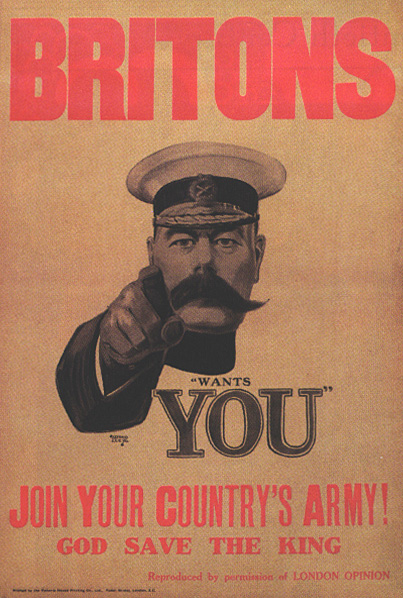
"Britons Want You"
Screen Print
Alfred Leete ,1914

These posters all took specific part in the history of poster design as they were designed through revolutionary means. 


The first poster I will discuss is a very old example of a poster used for the Abraham Lincoln presidential campaign and it was made through a woodcut process and is a very early example of poster design in history.


Even though poster design was around before this point this was a revolutionary poster as the posters prior to this even though they were made through a very similar lithographic process they weren't as advanced they were usually made from woodblock or metal engravings and had a lot less use of colour available. Jules Cheret pioneered the process of the three stone lithographic process and this was the birth of the modern day poster. This process allowed Jules to produce a poster through this means and too do it cheaply aswell allowing for low-cost colour posters to be made. This was a big step as it allowed posters to be more widely made across Europe and started a poster revolution


This poster is a poster called "Skegness Is So Bracing" designed by John Hassall in 1908. This poster was somewhat revolutionary as it was instead of being designed by lithography was designed by a silkscreen print. This printing process allowed for the designer to use a greater variety of colours. This is designed in the way that one colour is added at a time and this allows for a varied range of colours in the poster design.

This is my final poster in my timeline of poster history. This poster is revolutionary as it was a total change of the means of poster design in the real world. Instead of posters in the past  of which had been designed for artistic purposes or advertising purposes. This poster was designed for an effort to get people to fight in the war. This new reason for poster making changed how everything had to be done, posters now had to be made cheaply and had to be easy to reproduce. This brought on the idea of poster making by using the means of screen printing allowed this poster to be easily and cheaply reproduced.

The Bauhaus movement brought around a new style of poster design in the 1920's. There minimalist style brought around an age of posters of which were simple yet effective, all about function over form.

Here are some styles of graphical posters of which I am most fond of throughout history;


I am inspired massively by the very colourful and illustrative posters of the "Hippie" movement of the 1960s. The use of vivid colours, interesting typography and and the whole overall illustrative psychedelic nature is something that I love to see in graphic design. I am massively into designers of the modern day era who still create this style of design but in a much more modern way, for example a designer who had been an inspiration to from for a long time called Pannand, this is some of his work. The second image is a poster designed by an artist I also like who works in a very similar way;


I found this style as I listen to a lot of almost psychedelic rap of which has its obviously links to the psychedelic music of olden days.

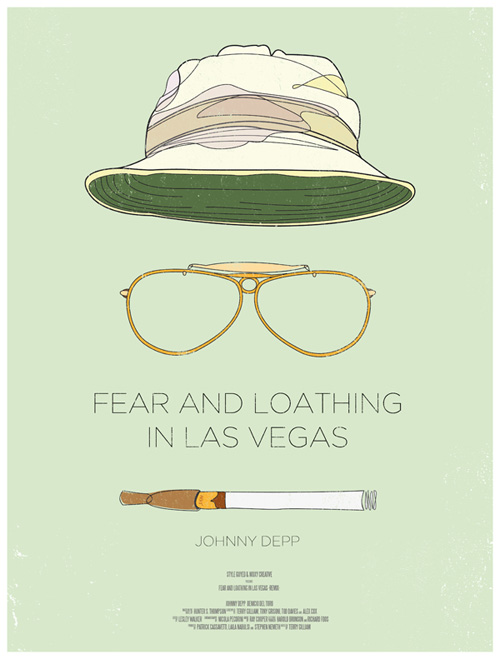
The final style of poster design that I am quite interested in is the redesigns of film posters but more specifically a certain style of redesign of which has a very simplistic theme to it, here are some examples of the posters designed by Moxy Creative;


This style of poster design is something that influences me massively and I would love to have a go at creating work in the same style.


OUGD403 Studio Brief 03 - Message & Delivery - Research Interim Crit

For this crit we were asked to have our final research all collated and make a presentation for this research in any way that we wanted. The presentation would be done to a group of our peers.

I started to think about a way that I could present my research. My favourite idea that I had about the means of presentation was to design three posters of which would be designed in a similar style to the way a boxing poster may be designed. Although this might not have been the most appropriate way to display paragraphs of body text I thought that It was the best way to display this information as it related to the nature of my story. 

I created these posters in a simplistic way so that it still gave the notion of the boxing poster but was also simple enough that it didn't take away focus from the body text. Here are the posters I designed;


During the presentation I had cue cards of which had the main points of my research on so that when presenting I wasn't reading out the whole thing off the screen I was only outlining the main focal points of my research. During the crit I only got positive feedback because my peers thought the research into whats happened since the fight was an interesting angle to take on it and they said there would have been too much to read on the posters alone but the fact that I also highlighted the focal points by voice this solved the problem, overall I believe this was a good way to present my research.

OUGD403 Studio Brief 03 - Message & Delivery - Research Continuation

As I had outlined the general theme of my research was going to be about the 40th year anniversary of the rumble in the jungle I had to them make my research more concise and decide on what the final research I was going to present was.

As I was researching the topic I came to the realisation that a lot of different websites and newspapers had wrote an article about the anniversary of the fight but they had all used the  anniversary of the fight to report on a different thing, this stuck to me as an odd thing but later after a lot of thinking branched into what I decided I was going to do my final research about. I would research into the last forty years and base it on what has happened since the fight in them last forty years, obviously basing my research about things related to the event. This was something I was really interested in looking at and therefore I was itching to get started. In my research I uncovered many different things that have happened since the fight ranging from the renovation of Ali's childhood home to the trouble of the city where the fight was held since the fight. Here is that research;


THE DOWNFALL OF ZAIRE

The city of Kinshasa, formerly known, as Ndolo is a city located in the west of the Dominican Republic of Congo. The DRC is a vast, barren central African country of which has access to some of the most lucrative natural resources of anywhere in the world, but despite this access to mass wealth, the ever-present reminiscence of a post war-stricken country trying to fight its way out of this and is further being held back by its painful struggle for independence and years and years of political wrong doing and violence across the city have left the city at the bottom economic pecking order. These problems are most apparent in the capital city Kinshasa. The fight was held at a stadium in the capital city called the Stade du Mai 20. The four light towers of the Stade du Mai 20 still dominate the skyline of the rundown neighbourhood of immocongo in the Kalamu district of the city. The rural ground that used to surround the stadium are now over populated areas of houses upon houses and desolate litter scatted pieces of land. The stadium that was once one of the biggest stadiums in the whole of Africa and now stands rotting and deteriorating, renames the Stade Tata Raphael in 1997 and is still used to host football matches but the irregular fixtures, littered interior and small groups of the few people in the stands doesn’t nearly compare to the roaring crowds who once cheered for their hero, Muhammad Ali. Although the country was looking like it was heading the wrong way people were still looking for new urban opportunities. From the 1980s things started to get worse. The price of the countries biggest export of which is copper dropped dramatically and because of this there was nothing to do in the countryside. This caused a great flux of people to move to the capital city, this caused the population to grow massively. All of these aspects combined with the fact that in 1991 the inflation rate had rose to 4000% caused mass riots and outrage from the population of the city. In the modern day even though there are no more signs of the socio-economic boundaries it is still very easy too see the difference between the two half of the city of which are dissected by the main boulevard that splits the town.

BEHIND EVERY GREAT MAN THERE IS GREAT WOMEN HELPING HIM

The 40th anniversary of the rumble in the jungle has brought to light a new piece of never before known information. Muhammad’s thirds wife Veronica Porsche told the media that a week before the rumble in the jungle in Zaire Ali arranged a secret marriage for him and his wife of the time even though he was still married to wife number two. He felt it had to be done before the fight. Porsche said only her, Ali and the African minister that married them were present at the wedding and the only other person they told about the wedding ceremony was Muhammad Ali’s masseur Luis Sarria. They knew better than to tell others and expose Ali to the legal circumstances and consequences that he could incur from being married to two women. Muhammad Ali and Porsche later got married legally in 1997 soon after he divorced his second wife. He later got divorced from Porsche in 1986

ALI’S BOYHOOD HOME GETTING A MAJOR RENOVATION.

Muhammad Ali’s home that he lived in as a young child in Louisville, Kansas is undergoing a major renovation by the owner a Kansas based restoration company. The home will be restored to its original condition and given to Ali on his 73rd birthday. Jared Wiess the Nevada bases estate buyer who purchased the house at 3302 Grand in the Parkland area, He has joined the 19th Century Restoration of Lawrence, Kansas and the plans for the restoration are set to start in two weeks. The restoration will cost in total around £250,000 and will start just after the anniversary of the rumble in the jungle fight. On the completion date the keys to the house will be handed over to Ali. The plan for the restoration is to return the house to how it looked back in 1954 back when young Cassius Clay lived there. Muhammad’s spokeswomen said “We are happy that the house will be fixed up and kept up to a good standard. It will preserve the legacy of Muhammad as a famous Louisvillian who grew up there. Reidermann said in a statement that he and Wiess would start to fund the restoration with money of their own. Buy they plan to run a fundraising event to raise the £250,000 that has been estimated as the cost for the construction costs. They say they hope to do this by getting a donation of as much as $5 per person as they believe this will achieve the amount they need.

FOREMANS REALISATION ON HIS LIFE.

Rumble In The Jungle “defeat to Muhammad Ali was my finest hour as a boxer” says George Forman, It may have been the lowest moment of his career but George Foreman is forever grateful to “The Greatest” for transforming his life 40 years ago. George Foreman can never forget the day he was beat by Muhammad Ali 40 years ago. George Foreman is reminded of this fact every dingle day that he turns on his computer at his Texas home. The image is of him tumbling down to the ground with Ali standing triumphantly over him after landing the punch that ended the rumble in the jungle. Foreman said “ it is a constant reminder for me every day to stay humble. Inevitably, the story tends to be told through the prism of Ali, with his sound bites and sledge hammer fists. Yet it was just as much a defining moment for Foreman, the first time he was made to feel truly mortal on the sporting stage, and a day that ultimately gave him his personal epiphany. Foreman, then 25, had been world champion for 21 months, having annihilated Joe Frazier and Ken Norton, both inside two rounds. He was considered impregnable, with Ali – who had lost the heavyweight crown to Frazier at “The Fight of The Century” in New York three years previously – widely written off in the build-up.

Ali’s Health

The sombre rumours that have stalked Ali for years are now gaining importance and are gathering greater urgency. Muhammad is sufferance from a very serious case of Parkinson’s disease. This stemmed from his brutal legacy of his twenty one year boxing career of which has now come back to haunt him. The disease has tightened its hold on his and now at the age of seventy-two it looks like he is in his final round and the fight is nearly over. Ali continues to strive on in life and battle his disease.

REMEMBERING THE FIGHT THAT WON BOXING’S CROWN PRINCE BACK HIS CROWN.

I’m satisfied that its fair to say that this fight will remain at the top of the list or legendary fight for a long, long time. Out of all his dozen high standard fights over the last ten years of his career this was definitely the most accomplished. We saw not the usual style of his fights where he dances round the stage arrogantly indulging himself, but the dedicated artist producing a boxing masterpiece. Ali stripped the massive Foreman of his frightening power by refusing to follow the expected path to the inevitable slaughter.
Instead of running away until his legs were drained of stamina, he backed slowly on to the ropes or into corners, smothering, spoiling, or simply absorbing the champion’s heaviest punches and countering with jolting accuracy and bewildering speed.
Poor Foreman, whose mind worked as ploddingly as his feet and hands moved, just could not understand what was happening. Though, initially, he thumped away to the body the clubbing blows that had destroyed Joe Frazier, Joe Roman and Ken Norton inside 15 minutes, this opponent would not crumble at his feet.
When he tried to reach Ali’s jaw he usually made contact only with gloves, forearms or, to his even greater embarrassment, thin air.
True, there were moments in the second and fifth rounds when many ringsiders thought Foreman’s strength and power would crush an ageing challenger who did not have the speed to escape.
As the points gap between them widened and Foreman’s face began to swell, his will to pursue a rugged course of action showed signs of faltering.
Then Ali let loose a decisive barrage of short punches, finishing with a right that sent Foreman sprawling to the blue canvas like an exhausted, utterly bewildered bear.
The fallen champion lay on his back, his right knee bent, trying desperately to gather his senses. At six, he stared pleadingly at his corner, at eight Dick Saddler signaled him urgently to rise and at “out” he was still struggling to his feet.

THE LIFE OF ALI’S MANAGER AFTER THE FIGHT.

Gene Kilroy had a perm, wore a safari suit and was always the first in the ring when George Forman failed to beat the count at the end of the legendary fight, but you will probably not have ever heard of him. He was Muhammad’s Ali’s manager and was the moving force behind the champion’s camp at the time of the legendary fight, was known as the facilitator. He was now and he still remains one of Ali’s biggest friends. Part of a tiny inner circle of which wore diamond-studded rings of fellowship.
Kilroy had met Ali at the Olympics in Rome and joined the Ali team during the boxers forced exile, leaving his job he had at the MGM Grand’s marketing division to manage Ali and the pair became firm friends. Kilroy was trusted by Ali to carry Muhammad’s mothers coffin at her funeral and by the time of the fight with Foreman arrived they were very close. Kilroy was there till the very end, the man with the perm and the safari suit, the last survivor of Ali’s inner circle of friends.  After Ali’s final defeat Kilroy moved on from being Muhammad’s manager. After the gut wrenching loss of his last match in Las Vegas he moved on to working in Las Vegas hotels as a fixer, greeter and friend to the cities highest roller.

OUGD403 Studio Brief 3 - Message & Delivery - Research


Studio Brief
Create a body of visual research in response to a story, issue or theme found in the national press tomorrow, Saturday 25th October..
Background / Considerations
The willingness and ability to formulate informed opinions about your subject matter is an essential skill for a graphic designer.

In addition to being aware of events, concerns and the (un)popularly held opinions of the world around you, you also need to consider the tone of voice with which they are reported.
It is important that you read the stories thoroughly and research issues that are raised fully before committing your self to a visual opinion.

You can be serious, humorous, questioning, opinionated, bold, or subtle.
Your research should be broad and varied and should include but not be limited to; statistical, empirical (opinions), and personal.
Use a variety of approaches to your gathering of research, including editorial coverage in local, national and international press via both print and web. You should aim to observe the trends and differences between different formats of communication. Be aware of and include in your research and documentation the tone of voice, the use of images, typography and layout/composition. 
Mandatory Requirements
The story, issue or theme must come from a newspaper published on Saturday 25th October..
Deliverables
A body of research into the story, issue or theme of your choice.
A physical copy of the newspaper.
For this brief we were asked to buy some newspapers on Saturday 25th October and to read through them all from something that interests us. From the Independent newspaper on that day I chose and article of which was talking about the 40th anniversary of the Rumble in the Jungle fight between Muhammad Ali and George Foreman this would be the basis and starting point of my research.


OUGD403 Studio Brief 2 Final Crit

For the final crit for this brief the crit style was more of a presentation to a big group, in this brief I . In this crit I explained the main design decisions that led to the final piece for this brief. I explained that the reason for my design style led from the fact of the notion of intricacy that came from my word mechanical. The second design decision that I made was to only create the uppercase letters to reflect on the heavy and robust notion of the word mechanical. Finally I explained the design decision behind my grid and the fact that the reason my grid is so simple as it is only made up of around 16 lines where as normal letterform grids comprise of many many more lines. This was to make my letterforms reflect on the sense of uniformity that comes from my word mechanical. 

For this crit simon told me that he really like the end product of this brief that I had created and that the points I made In the crit about my design decisions covered all the basis of the explanation I needed to give about my work. In this crit simon also told me that it could be beneficial to talk about things of which maybe I would have liked to go better in my work. A form of constructive criticism and this got me thinking that the one thing Im less sure about in ym final designs is that due to the very simplistic design of letters such as I and T that I found it very hard to make it as related to the Penrose triangle as the rest of the letter while still keeping similar rules between all the letters and this is something I would have liked to have more time to play with and find an alternative.

Overall I thoroughly enjoyed this unit as it gave me the chance to advance my skills with illustrator.

OUGD403 Studio Brief 2 Continuation

After scanning In my drawn grid for my letterforms I scanned it in to illustrator and then used the scan of it to mage a digitalised version. We were given illustrator workshops where we had directed sessions with an illustrator teacher where he showed us through the software and the main tools that we would need to advance in this brief. After this we would set off making out digitalised final letterforms. In this time I got my digital version of my grid made and then started adding the original letterforms of helvetica into my grid and making them in illustrator. 

In these sessions I started the initial stage in the development of my letterforms and eventually my full alphabet by making all of my letterforms the approximate size of my grid and then turning the text into a shape in illustrator by selecting the create outlines function. After this meant I was able to edit the original helvetica base by moving the anchor points to make my new letters. When I had done this I had the finished final shape for my whole alphabet and could start now adding the extra lines I need to add to make my final designs by using the pen tool to give the desired effect.

I started making the final design additions to all of my letterforms of which only consisted of straight lines as i believed these would be the easiest way to start by using the rulers to measure off the start and finish points of the lines and then do the maths to find the centre points of the lines so I could start adding my desired effects. This became tedious and added a lot of extra time take to create my letterforms. After looking into illustrator help guides a little more on the internet I found this can be done much easier than the way I was doing it. By going into the setting and selecting the add anchor points option this added the centre points to the lines of which then made it much easier to do. At this point the rest of the letterforms with only straight components were much easier and I was finished with them in no time.


A big problem came along when I started creating the curved letters with the pen tool I was unable to replicate the curves smoothly enough and they were too jagged so I needed to find a better way than this to reproduce the curves.After a discussion on ways that I could do this better with my peers I was informed that the best way to do this would be to copy the letter and then use the curve I needed to recreate put it in place and then to edit the anchor point position so it fit to the letter more smoothly. This method was much better as it kept the same angle of curve so it flowed better with the original letter and only took a small amount of editing to make it fit to the letter. After discovering this technique the rest of the letters were much easier to make and they were finished in no time.  When my whole alphabet of letter forms were made I fit them into a 4 by 7 grid as directed to by the deliverables for printing and to accompany this mad a document with my word spelled out in the font I designed, the definition of the word I was given (mechanical) and the grid that all my letterforms fit too.